
Sea Turtles
Sea Turtles of Palm Coast & Flagler Beaches: Ancient Travelers of Our Shoreline
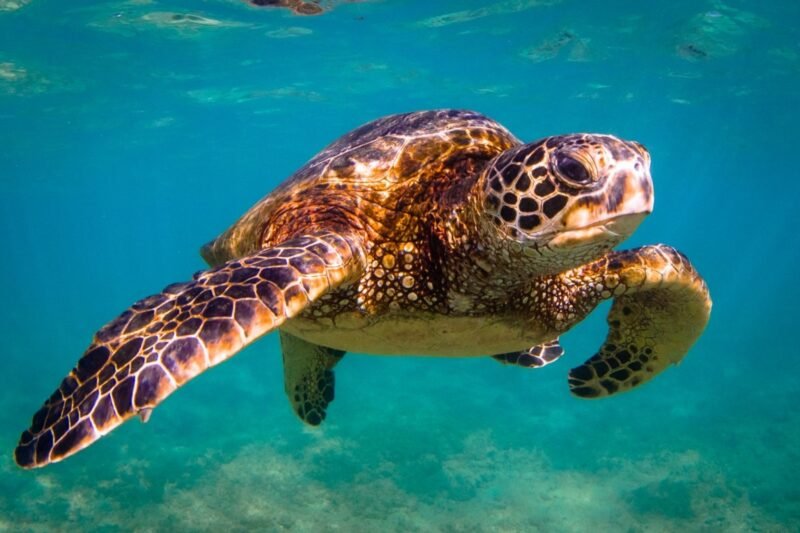
Every year, Palm Coast, Flagler Beach, and nearby barrier islands become part of one of nature’s oldest rituals — sea turtle nesting season. These incredible reptiles have roamed Earth for over 100 million years, and our quiet stretches of sand play a vital role in their survival. While beachgoers enjoy sunrise walks and ocean breezes, sea turtles quietly return to the very beaches where they were born, guided by instinct and Earth’s magnetic fields.
Nesting Season: A Nighttime Journey
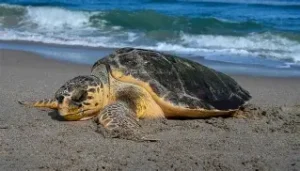
From May through October, female sea turtles come ashore under the cover of darkness to nest. In our area, the most common species you’ll see are loggerhead turtles, with occasional green turtles and the rare leatherback. Using their powerful flippers, they dig deep nests above the high-tide line and lay around 100 eggs at a time. After carefully covering the nest, the turtle returns to the ocean, leaving the eggs to incubate for about 60 days.
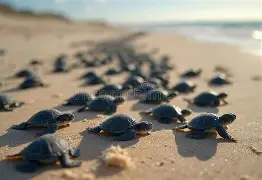
When the hatchlings emerge, they instinctively crawl toward the brightest horizon — ideally the moonlight reflecting off the Atlantic. This is why dark beaches save lives. Artificial lights from homes and flashlights can disorient hatchlings, leading them away from the ocean.
Life at Sea: Eating, Growing, Surviving
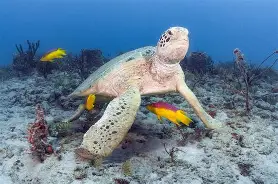
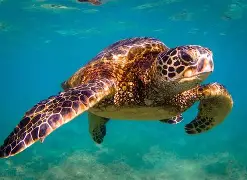
Once in the water, young turtles enter what scientists call the “lost years,” drifting in ocean currents and floating seaweed mats for protection. As they grow, their diets vary by species. Loggerheads primarily eat crabs, clams, and shellfish, using strong jaws to crush prey, while green turtles shift to a mostly plant-based diet, grazing on seagrass and algae.
Adult turtles spend most of their lives migrating between feeding grounds and nesting beaches, sometimes traveling thousands of miles across oceans. Despite their size, sea turtles remain vulnerable to boat strikes, fishing gear, pollution, and habitat loss.
Why Palm Coast Beaches Matter
Our beaches are more than scenic — they are critical nesting habitat. Local conservation groups regularly monitor nests, mark them for protection, and educate the community. Simple actions make a huge difference: fill in beach holes, remove furniture at night, keep lights off, and give nesting turtles plenty of space.
How You Can Help
-
Never disturb nesting turtles or hatchlings
-
Turn off beachfront lights during nesting season
-
Avoid flash photography at night
-
Report nesting activity to local wildlife authorities
-
Support turtle-friendly businesses and conservation efforts
A Shared Coastline
Sea turtles remind us that Palm Coast and Flagler Beach are part of something bigger — a living coastline shared with ancient travelers who return year after year. By protecting them, we preserve not only wildlife, but the natural magic that makes our beaches so special.
Did You Know? 🐢
-
Sea turtles can live 50–80 years or more, and some may even outlive the people protecting them.
-
Hatchling turtles imprint on their birth beach and can return decades later to nest in the same area.
-
The temperature of the sand determines a turtle’s gender — warmer sand produces more females, cooler sand produces more males.
-
Loggerhead turtles, the most common in Palm Coast, can weigh up to 400 pounds.
-
Artificial lighting is one of the biggest threats to hatchlings, often causing them to crawl inland instead of toward the ocean.
-
Only 1 out of 1,000 hatchlings is expected to survive to adulthood.